
SEO News 2026: Master the Latest Google Updates Reshaping UK Search in May
Executive Summary (TL;DR for Busy UK CMOs)
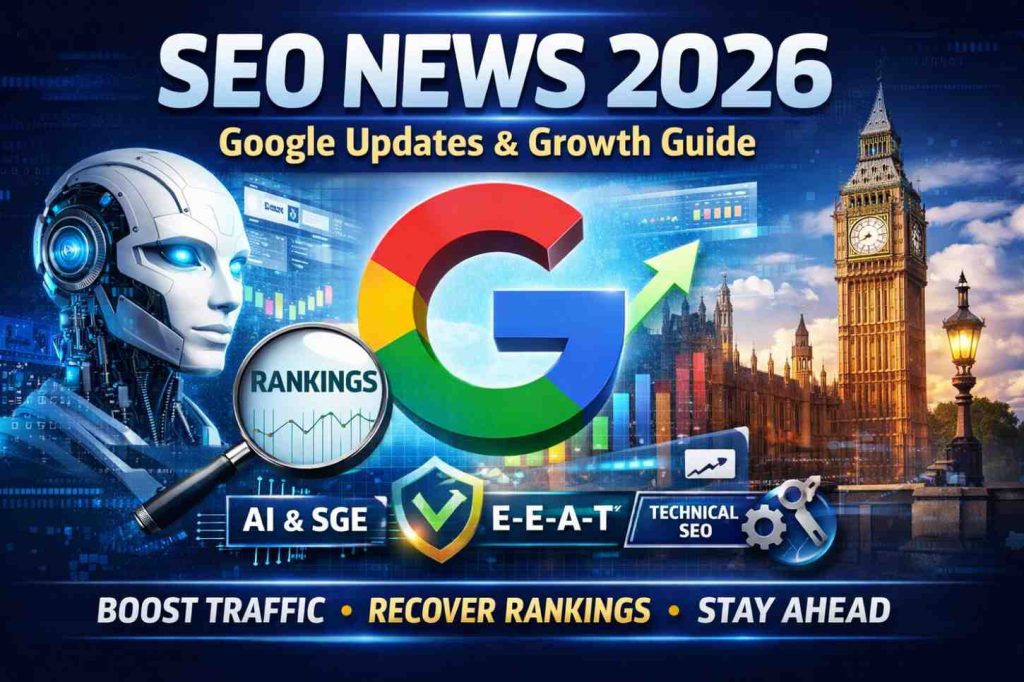
Google’s Spring 2026 algorithm cycle has significantly reshaped search visibility across the UK. With the March and April updates now fully rolled out, May has introduced a new layer of trust-led changes that are making rankings even more selective. Businesses are now facing stronger scrutiny around technical performance, topical authority, indexing stability, and whether their content is structured well enough to be surfaced inside AI-driven search results.
This is no longer just about recovering from a single core update. Google Search is becoming increasingly personalised, AI-curated, and source-sensitive.
New developments such as the global rollout of Preferred Sources, stricter anti-spam enforcement, growing reports of URL deindexing, and the wider expansion of AI Mode are already influencing how websites appear, disappear, or get cited across UK SERPs.
If your traffic has fluctuated this quarter, the issue may not simply be rankings. It may be that Google is reassessing whether your website is trustworthy enough to keep visible.
Trafficly’s UK SEO specialists can assess where your site stands after the latest Google changes and identify immediate recovery opportunities.
Email: info@trafficly.net
Call: 0843 289 3468
May 2026 Highlights: The Newest Google Search Changes UK Businesses Should Know
While the March and April 2026 Google update cycle continues to influence rankings, May has introduced several fresh developments that are making search visibility even more selective for UK businesses.
Google is no longer just refining how pages rank — it is becoming more aggressive about which sources it trusts, which pages it keeps indexed, and which content it chooses to surface inside AI-generated search experiences.
Here are the most important SEO News developments shaping May 2026:
Google Preferred Sources Expanded Globally
Google has rolled out its Preferred Sources feature across supported languages worldwide, allowing users to choose which publishers and websites they want to see more often in search results. This signals a stronger shift toward trust-led and user-preferred visibility.
New Spam Policy Targets Back Button Hijacking
Google has introduced a specific spam policy against “back button hijacking,” where users are redirected to deceptive pages or aggressive ads when attempting to leave a site. Websites using manipulative redirect behaviour now face increased manual action risk.
Growing Reports of URL Deindexing Across Sectors
SEO professionals are reporting higher levels of unexpected URL deindexing in early May, particularly on lower-value or weakly supported pages. This makes indexed page monitoring and crawl health more important than ever.
AI Mode Is Reducing Traditional Blue-Link Visibility
AI Mode in Google Search is becoming more prominent, displaying more direct summaries, citations, and AI-led responses while reducing reliance on standard organic listings. Content now needs to be clearer, more extractable, and easier for Google to cite.
Together, these May changes reinforce one clear message: ranking alone is no longer the only visibility metric that matters. Businesses must now focus on trusted source authority, technical cleanliness, indexing stability, and AI-ready content structure to remain competitive.
SEO News 2026: What Changed in Google Search by May?
The latest SEO News cycle is no longer centred around isolated algorithm refreshes. By May 2026, Google has moved deeper into a broader search ecosystem shift where visibility is increasingly influenced by trust, user preference, AI extraction, and technical integrity.
Over the last few months, Google completed:
- the March 2026 Core Update,
- the March 2026 Spam Update,
- the February Discover-focused ranking changes,
- and the April 2026 Core refinements.
Now, with these rollouts settled, the market is entering a post-update evaluation phase — and that phase is revealing a much sharper reality.
Websites with thin authority signals, weaker technical foundations, or low machine readability are seeing far less ranking stability than before.
Unlike previous years where publishing frequency could still compensate for quality gaps, Google’s systems are now prioritising:
- stronger first-hand expertise,
- deeper entity understanding,
- cleaner technical performance,
- clearer author trust,
- and extractable AI-friendly information blocks.
The result is measurable ranking volatility across UK legal, healthcare, finance, SaaS, and eCommerce sectors.
The Spring 2026 Update Cycle: The “So What?” for UK Businesses
What is the latest SEO news?
The latest SEO news in May 2026 centres on the after-effects of the March and April Google update cycle, alongside several new search changes now influencing ranking visibility across the UK. While the Google Discover Core Update, March Spam Update, and April 2026 Core Update have all completed their rollouts, Google has introduced further trust-based refinements through the expansion of Preferred Sources, stricter spam enforcement, and AI-led result presentation.
These updates continue to prioritise E-E-A-T signals, technical responsiveness such as Interaction to Next Paint (INP), and Generative Engine Optimisation (GEO), while also placing greater attention on indexing consistency and trusted source visibility.
The March–April update cycle reshaped how content is surfaced in personalised feeds, AI summaries, and traditional search listings, while May’s refinements are making those ranking shifts more selective.
What does this mean in practical terms?
- Brands without clear expertise signals continue to lose impressions.
- Sites ignoring Core Web Vitals impact are seeing ongoing ranking instability.
- Businesses relying on mass content production are struggling under the “content depth vs. volume” recalibration.
- Some lower-value URLs are showing signs of deindexing as Google becomes more selective.
- Trusted and recognisable sources are gaining stronger long-term visibility signals.
Google’s ranking factors in 2026 now weigh:
- Content authenticity
- Technical UX metrics
- Entity understanding
- Brand-level trust signals
- AI extractability and indexing consistency
If you experienced traffic decline, you likely need an algorithm recovery plan, not just new blog posts.
AI Overviews and the Rise of Generative Search
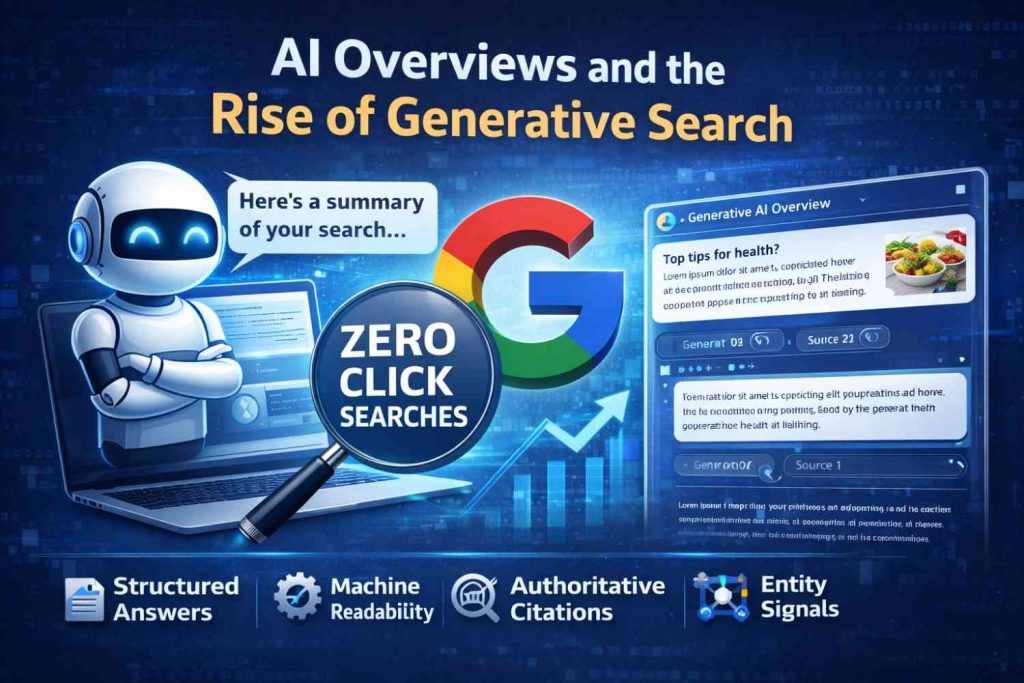
One of the most discussed developments in SEO News is the expansion of AI Overviews (SGE) in UK results.
These summaries answer user queries directly, reducing click-through rates for generic informational pages. This has accelerated the growth of zero-click searches, where users find answers without visiting websites.
To remain visible, brands must adopt AI Overviews (SGE) optimisation strategies:
- Clear, structured answers
- Machine readability
- Authoritative citations
- Structured entity signals
This shift has also introduced Generative Engine Optimisation (GEO), a discipline focused on training AI systems to recognise your brand as a trusted source.
Businesses that adapt early are already seeing stronger brand mentions in AI-driven outputs.
New Spam Enforcement: Back Button Hijacking Is Now a Manual Risk
In May 2026, Google introduced stricter enforcement against a spam tactic known as “back button hijacking.” This occurs when users try to leave a webpage using the browser back button but are instead redirected to unrelated pages, ads, or misleading content.
Google now classifies this as a deceptive user experience issue and may apply manual actions or ranking suppression to sites using such behaviour.
For website owners, this means technical SEO audits must now include user journey integrity checks. Redirect chains, intrusive pop-ups, and aggressive ad scripts should be reviewed to ensure users can navigate away from a page without manipulation or interruption.
Technical SEO in 2026: Performance Is Non-Negotiable
Google’s systems now measure experience more precisely. The introduction of Interaction to Next Paint (INP) as a core metric under Core Web Vitals 2026 highlights Google’s focus on responsiveness.
Slow interactivity reduces engagement and trust. We’ve seen UK retail sites recover rankings simply by improving INP scores.
Key technical priorities include:
- Mobile responsiveness
- Server stability
- Schema implementation for entity clarity
- Improved machine readability
Search engines now interpret context better through enhanced entity understanding, meaning structured data and semantic alignment are critical.
Rising Deindexing Trends: Why Indexed Pages Need Closer Monitoring
In May 2026, SEOs have reported an increase in unexpected URL deindexing across different industries. Many pages are still being crawled but are not consistently staying in Google’s index, especially low-value, thin, or weakly linked content.
This suggests Google is becoming more selective about what it keeps in search results, prioritising pages with stronger authority, engagement signals, and internal linking support.
For businesses, this makes index monitoring essential. Regularly check Google Search Console for coverage drops, “Crawled – currently not indexed” issues, and sudden declines in indexed pages to avoid silent traffic loss.
Content in 2026: Authority Beats Volume
Recent SEO News confirms that Google’s Content helpfulness guidelines are stricter than ever.
Pages built around shallow keyword targeting are declining. Instead, Google rewards:
- First-hand experience content
- Demonstrated expertise
- Strong E-E-A-T signals
- Clear author attribution
- Deep topical coverage
This supports a shift from isolated articles to topical authority building through structured topical authority clusters.
Authoritative storytelling and evidence-backed insights outperform generic AI-generated pages every time.
First-Party Data and Privacy-Led SEO
With cookies declining, first-party data SEO has become a strategic advantage. UK businesses collecting consent-based data can personalise content and refine keyword strategies more accurately.
Google values trust. Secure data practices improve brand perception and long-term loyalty.
This aligns with broader digital marketing trends for businesses, where transparency and privacy compliance influence brand credibility.
Emerging Search Behaviour: Voice and AI Agents
Search is no longer just typed queries.
Growth in voice search and AI agents means optimisation must reflect conversational intent. This is where Agentic SEO becomes relevant — ensuring AI assistants can retrieve and cite your content accurately.
If your strategy does not reflect conversational queries, you risk invisibility in emerging discovery channels.
For a deeper dive into conversational optimisation, read our guide on How AI and Voice Search are Changing Keyword Strategy in 2026.
Organic Traffic Recovery: A Structured Approach
If recent SEO News reports match your analytics decline, focus on structured recovery:
- Conduct a full search visibility audit.
- Review Google Search Console insights for impression drops.
- Strengthen content depth with genuine expertise.
- Improve INP and technical responsiveness.
- Build internal topical links strategically.
Businesses seeking sustainable growth often combine these steps with professional Organic SEO Services to ensure alignment with evolving algorithms.
Tool Spotlight: Leveraging Search Console and AI Diagnostics
Google has expanded performance reporting, offering richer behavioural signals.
Monitoring:
- Query intent shifts
- Click-through declines due to AI summaries
- Page indexing anomalies
These insights help refine your SEO strategy for 2026.
For UK-specific insights, explore our SEO Service Business News Tips UK hub, where we localise global trends for British markets.
If you are building keyword pipelines, our SEO Rank Hunter UK Guide to Finding Easy-to-Rank Keywords for the Future of Search can support opportunity discovery.
Zero-Click Visibility and Brand Authority
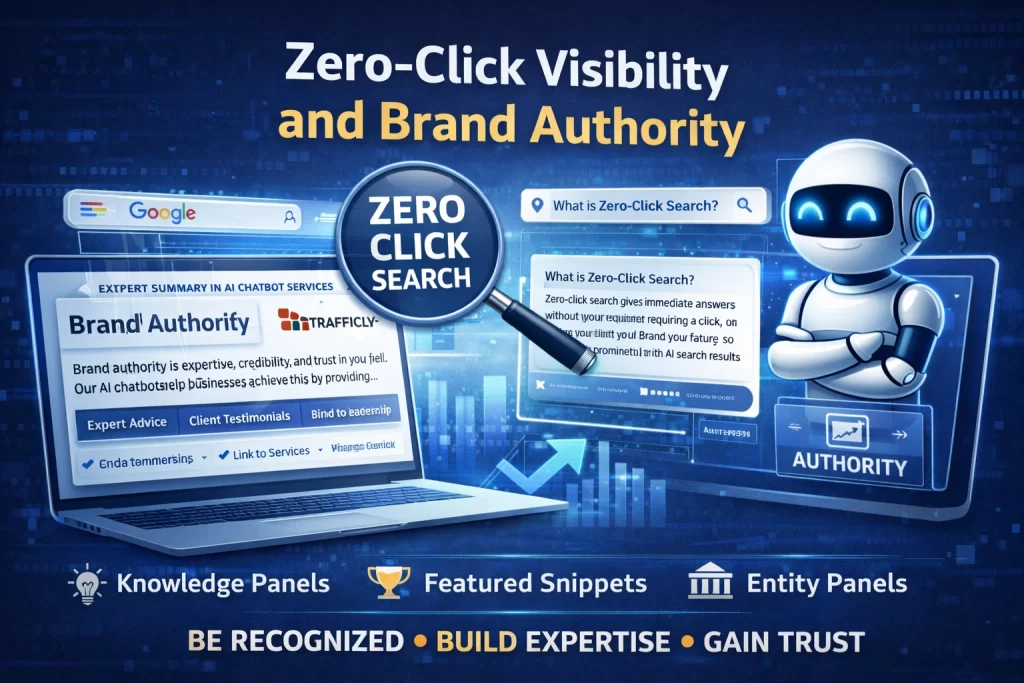
The expansion of Zero-click search visibility means brand recall is as important as traffic.
Your goal is not just clicks. It is recognition within AI outputs, featured snippets, and entity panels.
Brands that invest in Authoritative storytelling and expert-led insights dominate mentions, even when clicks decrease.
This is how strong brands future-proof organic performance.
The Strategic Shift: From SEO Tactics to Search Ecosystem Leadership
In 2026, SEO will no longer be a standalone channel. It integrates:
- Content strategy
- Technical optimisation
- UX performance
- Brand authority
- AI compatibility
Working with an experienced digital marketing company in UK ensures that these components align holistically.
Professional SEO services now require cross-functional expertise, blending data science, content authority, and UX precision.
Actionable Checklist: What to Change This Month
Based on the latest SEO News, UK businesses should:
- Audit content for expertise gaps: Upgrade “thin” pages with first-hand experience and E-E-A-T signals.
- Improve INP and mobile responsiveness: Ensure your site feels instantaneous to the user.
- Implement Schema Markup: Use “Organisation” and “Author” schema to help Google’s entity recognition.
- Review Search Console: Identify pages with high impressions but low CTR—these are likely being suppressed by AI Overviews and need better structured data.
- Build Internal Link Bridges: Link your news updates to your high-converting service pages (like your SEO Audit page) to pass authority.
These steps align with both Google’s technical expectations and user-centric principles.
Frequently Asked Questions
Q: What are the most important Google search changes in May 2026?
A:It includes the aftermath of the March and April 2026 update cycle, the global rollout of Google Preferred Sources, stricter spam enforcement including back button hijacking detection, rising reports of URL deindexing, and expanded AI Mode visibility in search results.
Q: Why has my traffic dropped recently?
A: The likely cause is a mismatch between your content depth, authority signals, and Google’s updated ranking factors 2026.
Q: How do AI Overviews affect my website?
A: AI summaries reduce clicks for generic queries. However, brands optimised for structured authority can still gain visibility and mentions.
Q: Is SEO still worth investing in?
A: Absolutely. But it requires strategic adaptation, not outdated tactics. SEO now rewards depth, expertise, and technical excellence.
News-to-Strategy Consultation: Turn Updates into Growth
The pace of SEO News will only accelerate. Each Google update separates reactive brands from strategic leaders.
If the latest Google update is hurting your traffic, do not guess.
Let Trafficly identify the technical weaknesses, visibility losses, and content trust gaps holding your site back.
Is the latest Google update hurting your traffic? Let our experts analyse your site for free.
Request your complimentary Google Update Impact Review and Technical SEO Audit today.
Email: info@trafficly.net
Call: 0843 289 3468
Contact us now for an expert-led review tailored to UK businesses ready to outsmart the competition.
Because in 2026, visibility belongs to those who adapt first.
