How AI and Voice Search are Changing Keyword Strategy in 2026
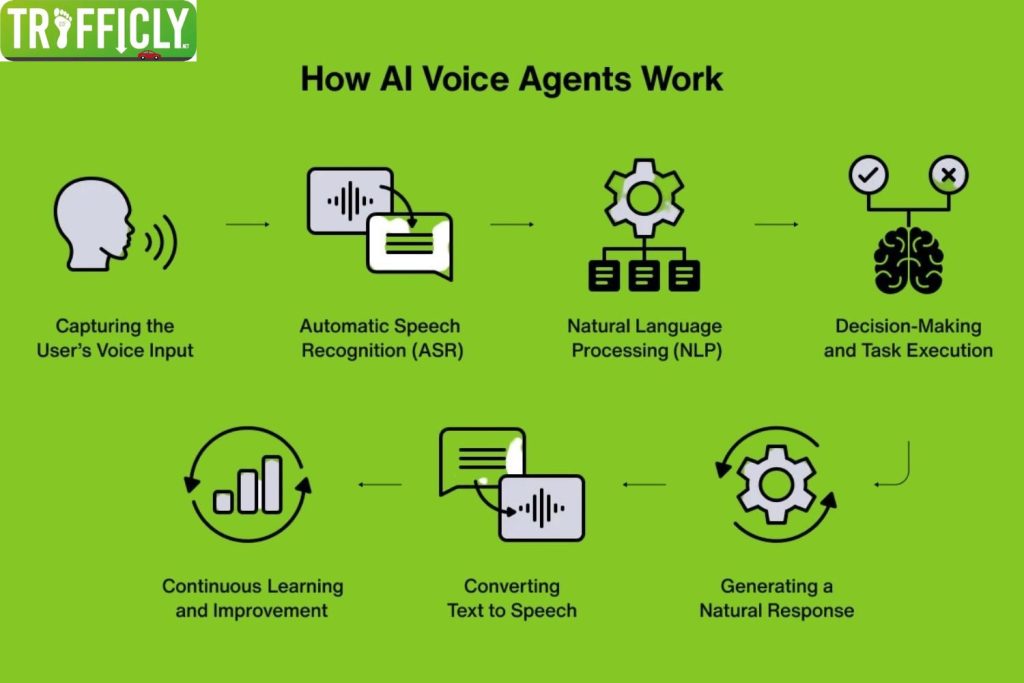
The search box is no longer the only gateway. By 2026, your customers will ask their devices, cars, and smart speakers complex questions in natural, flowing sentences. Simultaneously, generative AI is synthesising answers from the web, fundamentally changing how information is discovered. To remain visible, your approach must evolve. Building a successful Keyword Strategy for 2026 means moving beyond static phrases to master the dynamic interplay of AI and human conversation.
For marketers and business owners, this isn’t a speculative future trend—it’s the present reality shaping your next campaign. Success hinges on understanding how to speak the language of both intelligent algorithms and real people.
What is an “Answer Engine,” and Why Does It End the Old Keyword Era?
The old model was simple: a user typed a string of keywords, Google matched them to web pages, and presented a list of “10 blue links.” Your goal was to rank in the top three. That model is dissolving.
Today, platforms like Google are becoming answer engines. Through features like the Search Generative Experience (SGE), the AI doesn’t just list sources; it generates a direct, conversational answer. This creates more zero-click searches, where the user gets their answer on the results page.
As a result, many marketers are asking a critical question: can AI do SEO on its own in this new environment? While AI plays a powerful role in generating and organising information, success now depends on becoming the authoritative source behind those answers. This evolution renders rigid, keyword-only targeting ineffective and moves SEO into a new frontier—Answer Engine Optimization (AEO), where contextual understanding and genuine topic authority matter most.
How is AI-Powered Search Changing Keyword Research?
It’s moving research from guesswork to prediction. AI, particularly Large Language Models (LLMs), understands semantic search. This means it grasps the relationships between concepts—what we call semantic triplets (subject-predicate-object). It doesn’t see “best,” “running,” and “shoes” as separate words. It understands the unified request and the user intent behind it: to purchase footwear for athletics.
This enables predictive search. AI can anticipate the user’s next question. A query for “keyword strategy 2026” suggests the user will likely also want to know “how to implement voice search SEO” or “what is GEO.” Your content must pre-empt this by providing a complete, logical information journey.
This is the core of modern search optimisation: creating content that satisfies not just the first question, but the second, third, and fourth that the user (and the AI) will have.
How to Optimise Content Specifically for Google AI Overviews (2026)
While Generative Engine Optimization (GEO) provides the overarching framework, winning a spot in Google’s AI Overviews requires a tactical shift. Think of it as creating the perfect source material for a researcher. The AI is looking for definitive, well-structured information to cite.
The key is compact clarity. Your content must provide direct, scannable answers. Structure is everything: use clear headers, bulleted lists, and bold definitions within the first few lines of a section. AI Overviews heavily favour content that uses tables to present comparative data cleanly, and they frequently pull from verified FAQ sections. This is where precision in your SEO copywriting services matters—crafting explanations that are both human-friendly and machine-quotable.
In practical audits we’ve conducted, pages optimised with this “answer-first” structure saw a marked increase in visibility within AI-generated responses, even when traditional organic click-through rates evolved. It’s a clear signal of the evolving SEO landscape.
Voice Search vs. Typed Search: A Practical Comparison
To optimise effectively, you must hear the difference. Here’s a clear comparison:
| Typed Search (Historical) | 2026 Conversational & Voice Query |
| “London plumber” | “Hey Siri, which emergency plumber is available near me right now?” |
| “SEO benefits” | “OK Google, how can good SEO actually help my small business get more local customers?” |
| “weather forecast” | “Alexa, will I need an umbrella for my walk this afternoon?” |
| “best CRM software” | “What’s the best CRM for a small B2B team that integrates with Gmail and isn’t too expensive?” |
Notice the shift? Voice search keywords are inherently long-tail voice commands. They are full of context (“near me,” “right now,” “for my walk”), intent signals (“emergency,” “best for a small B2B team”), and natural language structure.
Common Keyword Strategy Mistakes to Avoid in 2026
As the landscape shifts, so do the pitfalls. Recognising these anti-patterns is as crucial as implementing best practices.
- Writing for Keywords, Not Conversations: Forcing old, short-tail keywords into content creates a jarring, inauthentic read that AI systems deprioritise.
- Over-Optimising for AI, Forgetting the Human: Chasing AI Overview visibility with hollow, template-driven content violates the core of Google’s Helpful Content Update. The user experience must remain paramount.
- Building Thin Topic Clusters: Creating a superficial pillar page with weakly linked, low-value cluster pages signals a lack of real depth. True authority requires substantial, interlinked content.
- Ignoring Entity Consistency: Your brand, products, and expertise should be described consistently (using clear Schema Markup like Organization and Author schemas) across your entire site to build a coherent entity graph for search engines.
The Three Pillars of a Future-Proof 2026 SEO Strategy
To build content that ranks in this new landscape, focus on these three interconnected pillars.
Pillar 1: Target Semantic Intent with Entity-Based SEO
Forget keyword density. Think about topics and entities (people, places, things, concepts). Entity-based search means Google understands that “Trafficly” is a B2B Digital Marketing Agency, which is a type of “company” located in the “UK,” that specialises in “search engine marketing trends.” Your content should explicitly define and connect these entities.
This is where Natural Language Processing (NLP) in SEO becomes practical. Use language naturally. Write about concepts in full, relating them to each other. This builds the contextual map that AI relies on. A strong SEO strategy for 2026 is built on this bedrock of semantic clarity.
Pillar 2: Structure for Frictionless UX & Featured Snippets
AI-powered search prizes clarity. Structure your content to be effortlessly scannable by both users and bots. Use clear, descriptive headers. Break information into bulleted lists. Provide direct answers to likely questions right after the question itself.
This format is crucial for winning Featured Snippets and appearing in “People Also Ask” (PAA) boxes—the primary fuel for generative AI answers and voice responses. By providing the clearest, most concise answer, you practice effective Generative Engine Optimization (GEO) and increase your chances of being the source that powers the AI’s response.
To technically reinforce this, implement specific Schema Markup & Structured Data. FAQPage schema for your Q&A sections, Article schema for blog posts, and even Speakable schema to explicitly tag content perfect for voice assistants can give you a significant edge in LLM Optimization.
Pillar 3: Build Unshakeable Authority with Topic Clusters
Authority is no longer about backlinks alone; it’s about content depth and authority on a specific subject. Move away from isolated blog posts. Build topic clusters.
Create one comprehensive “pillar” page on your core subject—for example, “Ultimate Guide to AI Search Optimisation.” Then, create interlinked “cluster” content that drills down into specifics: “Using Schema Markup & Structured Data for AI,” “A Guide to Conversational Search Queries,” and so on. This architecture signals to search engines that you offer exhaustive, expert coverage, satisfying E-E-A-T principles perfectly. This structured approach is the foundation of sophisticated organic SEO services aimed at long-term dominance.
Actionable Steps to Implement Your 2026 Strategy Today
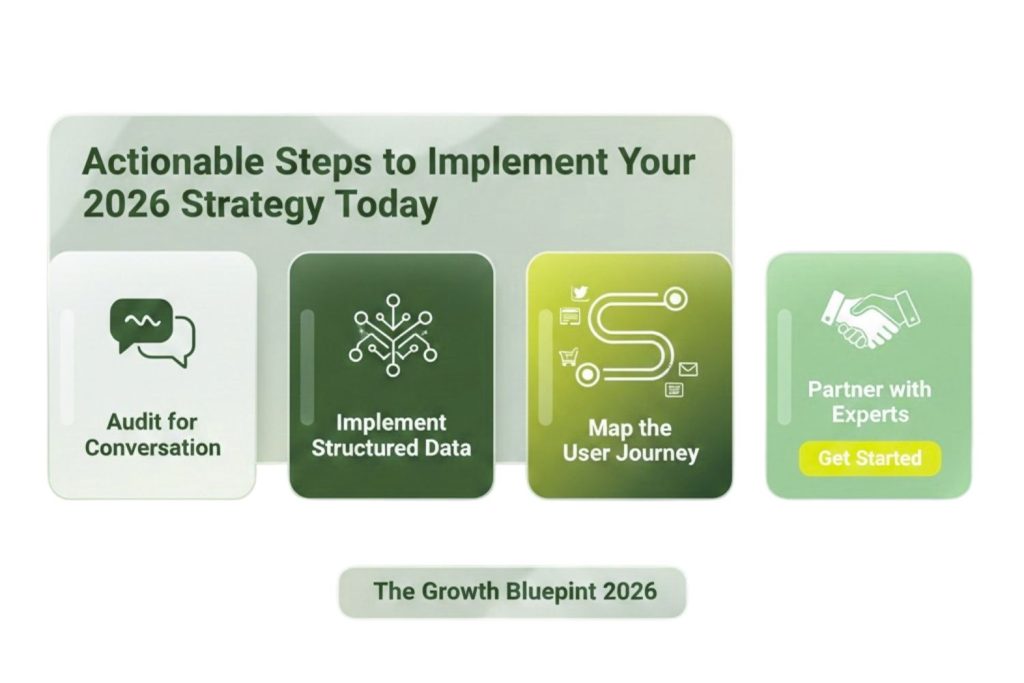
- Audit for Conversation:
Analyse your current content. Can questions be answered directly from your headers and opening paragraphs? Rewrite to be more conversational.
Implement Structured Data:
Immediately add Schema Markup (like FAQSchema, HowToSchema, ArticleSchema, and SpeakableSchema) to your key pages. This gives search engines an explicit blueprint of your content’s meaning, a non-negotiable for LLM Optimization.
Map the User Journey:
For every key topic, write down the first question, then predict the next five. Build your content to answer that complete journey, creating a frictionless UX. Using an SEO Rank Hunter mindset here means tracking how these semantic page groups perform as a whole, not just individual keywords.
Partner with Experts:
Implementing this can be complex. For many, partnering with a specialist like the best digital marketing company in UK can provide the strategic oversight needed to transition effectively, especially for SEO services for small business models that need efficient, scalable results.
Conclusion
The future of keyword research is not about finding quieter corners of the internet. It’s about speaking clearly in the main square where both people and AI are listening. Your Keyword Strategy for 2026 must be built on the principles of context, conversation, and comprehensive authority. It demands that you create genuinely helpful content structured for clarity, depth, and seamless discovery. By embracing entity-based SEO, optimising for answer engines, and building topical authority, you don’t just adapt to the change—you lead it. The conversation has already begun.
Make sure your brand is part of it.
This journey requires a blend of strategic insight and precise execution. For those ready to build a search presence that leads in 2026 and beyond, the path involves continuous learning and expert implementation.
Ready to take the next step? Explore our tailored SEO services designed to navigate this new landscape, from AI Search Optimization to building enduring organic authority.
Frequently Asked Questions
Q: Is traditional keyword research completely dead?
A: Not dead, but transformed. Research is still vital, but its purpose has shifted. Use keyword tools to discover questions, conversational phrases, and user intent, not just to find strings of words to repeat. It’s the starting point for understanding topics, not the final goal.
Q: How quickly do I need to adapt to this?
A: The evolving SEO landscape is already here. Google’s SGE and widespread voice search adoption are current realities. Starting now gives you a crucial competitive advantage. Brands that wait until 2026 will be playing a costly game of catch-up in a matured modern search optimisation environment.
Q: Will this approach work for local businesses?
A: Absolutely. In fact, voice search and hyper-contextual AI are huge opportunities for local businesses. Optimising for long-tail voice commands like “book a table for two at a romantic Italian restaurant near me tonight” is a direct path to high-intent customers. Ensuring your Google Business Profile is flawless and your site uses local schema is essential.
Q: What’s the single most important technical change I can make?A: Implementing robust Schema Markup & Structured Data. It acts as a direct guide for search engines, clarifying your content’s structure, authorship, and purpose. This directly feeds entity-based search understanding and improves your eligibility for rich results and AI Overviews.